It is no secret that Greek cuisine is excellent. At the first hint of summer, travellers choose Europe's most popular islands to enjoy sunshine and saganaki (fried feta cheese). But you move further north, to the island of Límnos, to discover some of Greece's best delicacies while avoiding the crowds.
The theme of environmental sustainability linked also to food is one of the central topics of Best in Travel 2021, in which we have engaged and enjoyed profiling what will be the trends in tourism in the year to come, such as the special focus that Greece Greece adopts in the development of organic cuisine.
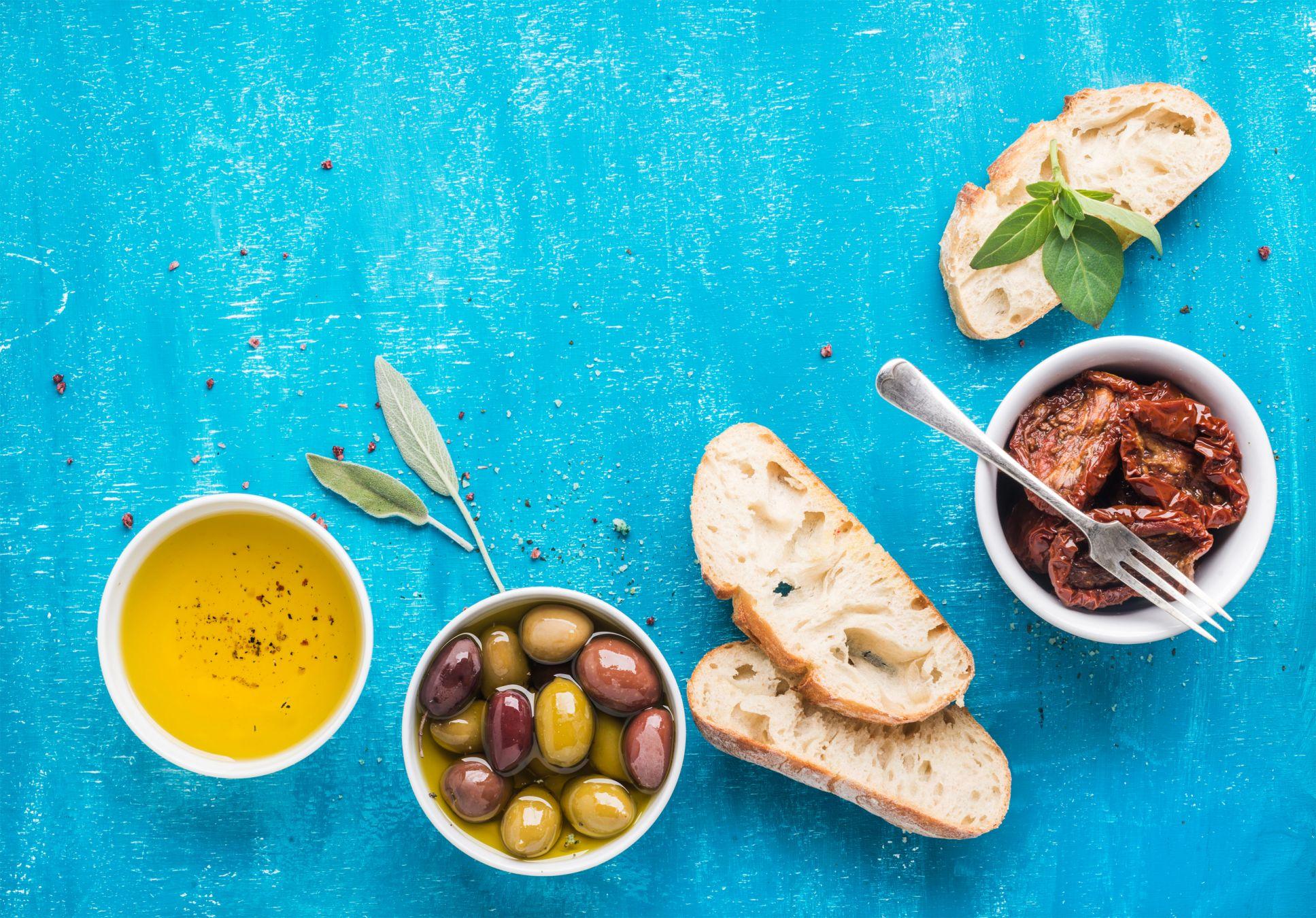
Greece is a food lover's paradise © Foxys Forest Manufacture / Shutterstock
Welcome to Límnos
We leave Kyda, the main pedestrian street of Myrina, as soon as we spot two majestic plane trees and an empty table. It is almost three o'clock and most of the shops in town are closed in the early afternoon. There is no real siesta in Greece, but the quieter islands, like Límnos, prefer to close at lunchtime and stay open late into the warmth of the summer evenings. That is why even at this hour the small restaurants open for lunch, such as O Platanos, are packed.
We grab seats in the afternoon sun. Around us, people's animated conversations mingle with the sound of the wind in the trees. Old friends stroll together, their arms laden with fresh vegetables. Customers at the next table stage a dish dance, exchanging plates until everyone has had a generous portion of everything.
After a few minutes the owner appears with the menus, but my companion's father, our guide on the island, dismisses them with his hand and orders from memory. He explains that the same dishes have been prepared here forever.

We share the dishes ordered to taste all the dishes at O Platanos © Brester Irina / Shutterstock
Without realising it, we find our table overflowing with food. Oven-baked yemista (stuffed tomatoes and peppers), barbecued octopus and feta topped with oregano on a bed of field salad. All this accompanied, of course, by tzatziki and plenty of fresh bread. But the highlight is the Flomaria pasta, a Límnos speciality, with tomato and roasted meat.
My taste buds gloat with every bite: the olives from Límnos, savoury and salty, the tomatoes, so sweet you eat them as if they were fruit. The food at O Platanos reflects the philosophy of the local cuisine: simply a triumph. Thanks to the combination of quality ingredients and age-old recipes, this island is considered a gastronomic utopia.
What to eat in Límnos
The variety and presence of minerals make the soil of Límnos particularly suitable for various crops, especially wheat, although in recent years the island has become famous for cheese, olives and liqueurs: the Greek holy trinity.

Octopus is a must of dishes to order in Greece © LauraVl / Shutterstock
Subscribe to our newsletter! For you every week travel tips, special offers, stories from the world and 30% discount on your first order.
Fish is the star of menus in the Aegean, and Límnos is no exception. Dine in one of the tavernas overlooking the sea and dive into feasts of psári (fish), htapothi sti skhara (grilled octopus) and kalamarakia tiganita (fried squid) caught fresh daily. If you prefer meat, order the rabbit stifado (stew) from Mantella Taverna or go to Grammóphōno for a succulent pork souvlaki stuffed with paprika chips, onions, tomatoes and tzatziki.
Cheese lovers will go crazy over the unique selection of local products. Melichloro, an aged cheese made from sheep's and goat's milk, and kalathaki, a pungent cheese preserved in brine, are two of the best, but as in the rest of Greece nothing beats a good feta.
Different interpretations of these dishes can be found all over the country, but the passion with which the people of Límnos choose fresh produce and raise their animals in the open, as well as the highly favourable conditions of the island, elevate the traditional recipes to extraordinary levels.

Always leave room for dessert, such as kourabiedes © mpessaris / Shutterstock
Something sweet
Apart from the more traditional sweets, such as kourabiedes (butter biscuits covered with icing sugar) and bougatsa (baked phyllo dough filled with custard), Límnos has its own typical sweets. The sesamehalva is an institution, as are the samsades. Reminiscent of baklava, samsades are sweets made of layers of phyllo dough, baked in the oven and then dipped in syrup, honey or petimezi (cooked must). Stop by Axni & Kanella in the centre of Myrina to try some of the best sweets on the island.
Honey is another speciality of Límnos and has been produced for centuries thanks to the indigenous passion for beekeeping. Classic varieties abound, but the most famous is thyme honey, made from an infusion of local wild herbs. The nectar produced by Honey Hasapis has even won an award and is worth the trip east to the town of Moudros.

Remember to be careful with ouzo, it has a very high alcohol content © Kime ait / Shutterstock
A shot or two
Límnos has an ancient past as a wine producer, favoured by the volcanic nature of the soil and the Mediterranean climate. The roots go back as far as the time of Homer, who extols in the Iliad the wine of Límnos, liquid comfort of the Achaeans during the Trojan War.
It is interesting to note the considerable influence of geography on the quality of the krasí (wine) of Límnos. As there is little relief above the island, there is no contrast to the blowing winds and consequently these are able to mitigate the intensity of the Greek sun, prolonging the growing season and allowing the grapes to develop a more intense flavour. The most famous whites are made from the Moshato Alexandrias grapes, belonging to the Muscat family; they are usually light and aromatic wines, to be served chilled. Kalambaki is the indigenous red par excellence, from one of the oldest types of grapes in Greece.
Wine tourism is still taking its first steps and tastings are mainly done in Greek. For budding sommeliers, the family-run company Taste Lemnos organises cheese and wine tastings, a tour to discover the best combination the island has to offer.
Typical liqueurs, such asouzo, are produced locally, in distilleries known as lakaria. Remember to drink in moderation, alcohol contents usually exceed 40 per cent.
A Hellenic paradise
Between golden beaches, history and a sense of hospitality, Límnos may be Greece's best-kept secret. The country's eighth largest island has all the trappings of a tourist destination, but its more isolated location has ensured that it stays off the radar: the coastline does not get crowded even in high season.
It can be reached in an hour by plane from Athens and, although it is not as well connected by ferry as the rest of the Cyclades, it is certainly worth the effort. It is impossible not to be amazed by the cobbled streets of Myrina, capital and seaport in the shadow of the imposing castle, the fertile plains, sand dunes and volcanic landscapes. The beaches of Thanos and Plati are the most popular in summer, but there are many more to dive into.
If you are the adventurous type, try windsurfing at Keros Bay or hike to the roofless chapel of Panagia Kakaviotissa. History lovers can wander among the ruins of Myrina Castle and visit Poliohni, the first prehistoric settlement of the Aegean civilisation.
Safe from mass tourism, Límnos continues to flourish.